
Microcrystalline wax is selected when a formulation needs more flexibility, tack or oil-binding capacity than a conventional paraffin wax can provide. These properties make it a useful blend component in packaging, polishes, adhesives, coatings and other demanding industrial applications.
However, microcrystalline wax is not one uniform material. Its congealing point, oil content, colour, hardness and degree of refining can vary significantly between grades. Choosing well therefore starts with the performance required in the finished product, not simply with the word “wax” on a specification sheet.
This guide explains what gives microcrystalline wax its distinctive character, where it is commonly used and what formulators should assess before approving a grade.
In this microcrystalline wax guide
- How it differs from paraffin wax
- Seven industrial applications
- The specifications that matter during selection
- A practical technical-enquiry checklist
- Answers to common formulation questions
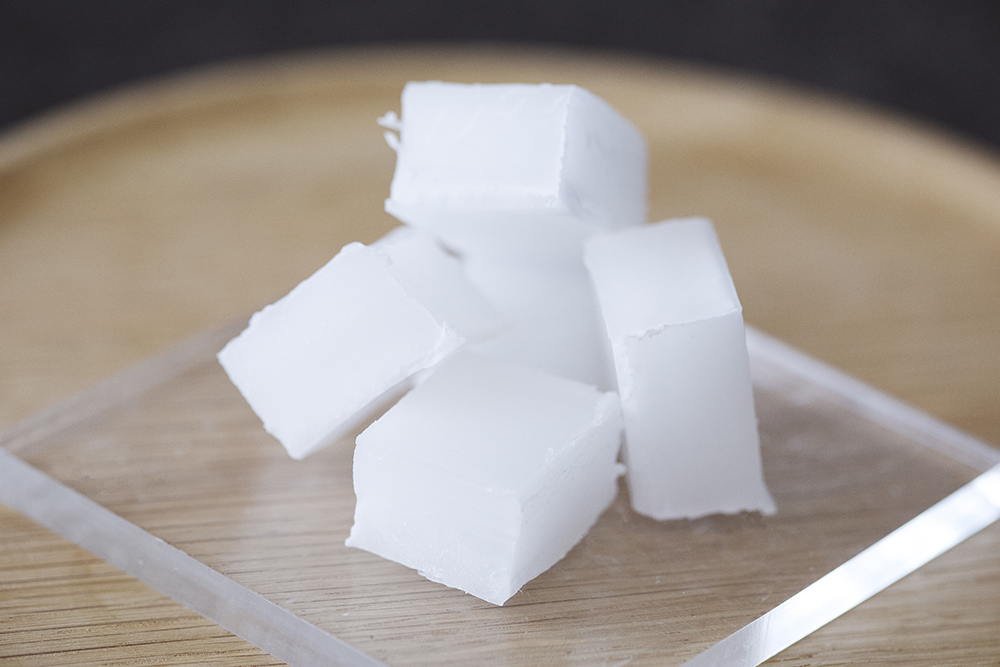
What is microcrystalline wax?
Microcrystalline wax is obtained during the refining of heavier lubricating-oil fractions. Its hydrocarbon structure contains a greater proportion of branched and cyclic molecules than typical paraffin wax. Instead of forming the larger, more regular crystals associated with paraffin, it forms much smaller crystals.
That structural difference affects practical performance. Microcrystalline grades are generally more flexible and tacky, and they can offer useful solvent- and oil-binding behaviour. Many grades also have a higher melting or congealing range than standard paraffin waxes.
The PubChem microcrystalline wax reference describes it as a petroleum-derived mixture of straight-chain, branched-chain and cyclic hydrocarbons. The precise balance varies by feedstock and refining route, which is why technical evaluation matters.
Microcrystalline wax versus paraffin wax
Paraffin wax is usually more crystalline, more brittle and less tacky. It is often chosen for clean burning, cost-effective barrier properties or predictable melting behaviour. Microcrystalline wax is frequently introduced when the formulation needs to bend, hold oil, bind components or remain cohesive under changing conditions.
This does not make one material universally better. A paraffin grade may be ideal for one process, while a microcrystalline grade or a blend of both may perform better in another. The correct choice depends on the substrate, processing temperature, target texture and end-use environment.
| Selection point | Paraffin wax | Microcrystalline wax |
|---|---|---|
| Crystal structure | Larger and more regular | Smaller and more complex |
| Typical feel | Harder and more brittle | More flexible and tacky |
| Oil binding | Usually lower | Often stronger |
| Common role | Barrier, cost and predictable melt | Flexibility, cohesion and blend modification |
7 common microcrystalline wax uses
1. Flexible packaging and curtain coatings
Microcrystalline wax can help a coating tolerate flexing without cracking. Its tack and binding characteristics may also improve cohesion in blends used to protect paper or other packaging substrates.
2. Polishes and surface-care products
In shoe, floor, automotive and industrial polishes, the wax can contribute body, film formation, gloss and a controlled feel. The selected grade must remain compatible with the solvent, oil or emulsion system used in the polish.
3. Adhesives and sealants
Microcrystalline wax can modify tack, flexibility and flow in adhesive systems. It may be used to adjust processing behaviour while helping the finished bond remain less brittle.
4. Oil-binding formulations
Some products need a wax network that holds oil and limits separation. Microcrystalline structures can be useful in these systems, provided the grade is tested against the actual oil phase and storage conditions.
5. Mining explosive emulsions
In certain wax-based explosive formulations, microcrystalline wax can support the flexibility, rheology and stability required by the application. This is a specialist use that requires controlled formulation, testing and strict compliance with relevant safety procedures.
6. Rubber and protective compounds
Microcrystalline wax can be used in rubber-related formulations and protective blends where controlled migration, flexibility or barrier behaviour is required. Compatibility with the polymer system remains essential.
7. Custom industrial wax blends
Many applications use microcrystalline wax as one component rather than as a standalone material. Combining it with paraffin, synthetic, natural or functional waxes allows formulators to balance cost, hardness, tack, melting behaviour and finished performance.
How to select a microcrystalline wax grade
Begin with the end-use requirement
Define what the wax must achieve. Is the priority flexibility, tack, oil binding, solvent binding, barrier performance, polish consistency or a particular processing window? A clear target prevents grade selection from becoming a comparison of isolated data-sheet numbers.
Compare thermal behaviour
Congealing point and drop point influence processing, storage and service temperature. The grade must melt and incorporate within the available process while remaining stable at the temperatures the finished product will experience.
Assess oil content and refinement
Oil content can affect colour, odour, softness and compatibility. A fully refined and hydrogenated grade may be appropriate where colour and purity are important. A less refined grade may suit an industrial use where oil binding and flexibility take priority.
Test hardness, penetration and tack
Two grades with similar congealing points may feel and perform differently. Penetration or hardness data, supported by practical trials, helps indicate whether the wax will give the required flexibility and surface character.
Confirm regulatory suitability
Food-contact, personal-care, pharmaceutical and other regulated uses require application-specific documentation. Suitability should never be assumed from the general wax family. Ask for the relevant technical and safety documentation for the exact grade.
Evaluate compatibility in the full formulation
Laboratory tests should include the actual oils, polymers, resins, solvents, surfactants and pigments used in production. Compatibility problems may appear as separation, haze, poor flow, unstable viscosity or reduced finished performance.
Questions to include in a technical enquiry
Provide the application, current wax or formulation, processing temperature, target congealing range, colour requirements, required physical form and any regulatory constraints. It also helps to describe the failure or performance gap the new grade must solve.
Cerax supplies refined and unrefined microcrystalline options and supports customers in comparing grades for specific applications. Review the Cerax microcrystalline wax range or discuss a custom wax blend when one grade cannot provide the complete performance balance.
Frequently asked questions about microcrystalline wax
Open a question to see the practical answer.
Is microcrystalline wax the same as paraffin wax?
No. Both are hydrocarbon waxes, but microcrystalline wax generally has smaller crystals, greater flexibility and stronger tack or oil-binding behaviour.
What is microcrystalline wax used for?
Common uses include flexible packaging coatings, polishes, adhesives, sealants, oil-binding systems, rubber compounds and custom industrial wax blends.
Can microcrystalline wax be blended with paraffin wax?
Yes. Blending is common when a formulation needs a deliberate balance of cost, hardness, flexibility, tack and melting behaviour.
How do I choose a microcrystalline wax grade?
Compare the end-use target with the grade’s thermal range, oil content, hardness, colour, refinement, delivery form and regulatory documentation, then test it in the full formulation.
Is every grade suitable for food, cosmetic or pharmaceutical use?
No. Suitability must be confirmed for the exact grade, intended use, dosage and market using current supplier documentation.
Discuss your microcrystalline wax requirement
Share the current formulation, processing temperature and performance gap with Cerax so the technical team can help narrow the options.
A practical route to better performance
Microcrystalline wax earns its place in a formulation through flexibility, tack and binding behaviour. The best results come from matching those strengths to a clearly defined end use, then validating the choice through controlled application testing.
Rather than treating waxes as interchangeable commodities, evaluate the grade as a functional part of the system. That approach reduces avoidable trial and error and gives procurement, production and technical teams a common basis for approval.