
CUSTOM BLENDS
Custom blends for industrial wax applications
Cerax develops custom blends around customer performance requirements and manufacturing conditions. Customers can approach the team with a specific application brief or discuss opportunities to review the balance of processing behaviour, finished performance and cost.
An experienced research and development team supports these requirements. The application families below include grafting waxes, specialised lubricants, petroleum-jelly concentrates, match waxes, toll manufacturing and candle-related products.
Planning custom blends: 6 questions for your brief
1. What is the product intended to achieve?
Describe the intended use and the properties that matter in the finished application. Identify the present limitation and the conditions under which it appears. Include the current material or specification when available, and distinguish essential performance requirements from preferences.
A clear brief helps the technical team consider whether an established product, a modification or a tailored formulation is the appropriate starting point.
2. Which materials must the formulation work with?
Explain the substrate, other ingredients and any compatibility constraints. Depending on the application, the discussion may involve paraffin materials, synthetic grades or natural wax options.
Do not assume that materials with similar melting behaviour will perform identically in a complete formulation. The proposed combination should be evaluated against the actual application.
3. What are the processing conditions?
Provide the equipment, application method, relevant temperature range and downstream operations. Describe any material-handling or packaging restrictions. These details help connect the formulation brief with the practical conditions under which the product must be used.
If the current issue occurs only during a particular production stage, include that observation rather than describing the finished result alone.
4. Which documents or specifications are required?
State the relevant product specification, test methods and any customer-required end-use documentation. Ask for current technical and safety data for the proposed material before a trial. Approval requirements must be assessed for the exact product and intended use.
For chemical terminology used when discussing polymer-containing formulations, see the IUPAC definition of a polymer. This is terminology background, not product certification.
5. How will a sample be evaluated?
Agree a reference material, trial objective and assessment method. Keep preparation and application conditions consistent when comparing candidates. Record the sample identity, processing observations and finished-product result.
Review the evidence with the technical team before changing trial scale. If a candidate meets one requirement but misses another, specify the trade-off so the next discussion can address it.
6. Which supply and solidification details matter?
Explain the preferred physical form, packaging, expected demand and practical handling requirements. Cerax also provides toll manufacturing and solidification services as described below. The available route should be confirmed for the specific material and requirement.
Keep the agreed specification, product documents and evaluation record together. This supports a consistent purchasing discussion if the formulation, process or supply requirement changes.
For an established product-family overview, explore industrial wax blends. Contact Cerax with your brief to discuss custom blends, technical input, sample evaluation and supply options.
Choose the right route for custom blends
A request for custom blends can mean a new formulation, a change to an existing material or manufacturing support for a product already defined. These are different starting points. Explain which route you need and what is already agreed, so the technical and commercial discussion does not begin with different assumptions.
| Route | Starting information | Question to resolve |
|---|---|---|
| Existing product | Application and current specification | Does an established grade meet the requirement? |
| Tailored formulation | Required change and retained properties | Which trade-offs should a candidate address? |
| Toll manufacturing or solidification | Defined material and manufacturing brief | Which services and supplied form are appropriate? |
The routes can overlap, but they should not be assumed to include the same work. Confirm the proposed scope with Cerax, including any information still needed before a candidate or manufacturing route can be considered.
Application questions for custom blends
Grafting applications: what belongs in the product brief?
The grafting section describes wax blends developed for agricultural grafts, including fruit trees and grape vines. A useful enquiry identifies the application and the practical conditions in which the material must perform. If flexibility or temperature sensitivity is central to the requirement, say how those characteristics are assessed in the current product.
Separate the function needed from a general request for a grafting wax. Include the preferred supplied form, application method and any constraints that the proposed material must respect. If an existing product is being replaced, describe the reason for the change and the result that must be retained. This provides a clearer basis for discussing custom blends than relying on the application name alone.
The range description is not a guarantee of a particular agricultural outcome. Confirm the grade information and evaluation requirements for the intended use. Any trial should be assessed against an agreed reference, with observations that distinguish material behaviour from differences in application conditions.
Specialised lubricants: which operating conditions matter?
Cerax lists specialised lubrication applications such as die-cast plungers and liners. For an enquiry in this area, describe the equipment, the role of the wax component and the operating conditions that affect the current material. Explain whether the issue relates to application, process consistency or the performance of the finished lubricant.
A request for custom blends should identify the properties that may change and the constraints that must remain fixed. Include the current product specification where available, rather than relying on a broad term such as high performance. If there is an equipment or customer requirement, distinguish it from a preference so the team can assess the practical priorities.
Discuss the candidate in the complete lubricant system. A wax component may need to work with other ingredients and the intended application method. Grade information and sample assessment should therefore relate to the actual use, not to a temperature figure or material family viewed in isolation.
Petroleum-jelly concentrates: am I requesting a concentrate or a finished product?
The petroleum-jelly section describes a wax concentrate or masterbatch that is combined with mineral oils to obtain the final specification. Clarify which part of that system your enquiry concerns. A concentrate and a finished jelly are not the same buying description, even when they contribute to the same application.
Identify the intended use, the relevant oil or compatibility information and the properties required in the finished result. If your brief concerns a personal-care application, specify the grade documentation needed for that use. If it concerns cable protection, identify the cable application and the requirements to be reviewed. Do not assume that a statement about one use applies to another.
Cerax describes tailored cable-jelly options around properties such as thermal stability and shrinkage. State the property you need to address and how the present product is assessed. Ask the technical team which candidate and supporting documents are appropriate before treating a concentrate as a direct substitute.
Match-wax enquiries: what commercial and document information should I provide?
The match-wax section identifies refined and semi-refined paraffinic blends for this application. Keep the enquiry focused on the exact product requirement, the existing specification and the documentation needed by your organisation. A family name does not establish that a candidate is an approved replacement for the material currently used.
Provide the commercial details needed for a supply discussion, such as expected quantities, delivery requirements and preferred product form. Request the relevant technical and safety documents for the proposed grade. If the specification contains requirements that are not shown in the catalogue, identify them clearly so they can be reviewed rather than assumed.
Agree the scope of any further technical review through the appropriate professional channels. This page introduces the supply offering; it is not a manufacturing procedure or handling guide. Use the current grade documentation and your organisation’s approved processes when assessing whether a product is suitable for this application.
Candle-related custom blends: how should I define the finished result?
The candle section introduces Cerax products for different candle-related requirements. A useful brief identifies the intended product format and the present material, then explains what needs to change. Describe the finished result you want to retain as well as the issue you want the candidate to address.
Distinguish a new formulation enquiry from a replacement enquiry. In a new formulation, some requirements may still be open; in a replacement, the existing product provides a reference for comparison. State which conditions or ingredients are fixed and which may be reviewed. This helps the discussion about custom blends remain focused on the actual development task.
Request current information for the proposed grade and confirm the intended supplied form. Any sample should be evaluated in the complete intended product, using the agreed assessment criteria. Availability, lead time and suitability should be confirmed for the actual enquiry rather than inferred from a general range description.
Toll manufacturing and solidification questions
How is toll manufacturing different from developing custom blends?
Cerax describes toll-manufacturing capacity in wax purification and refining. A manufacturing enquiry should explain what material is being supplied or specified, which work is required and which properties the output must meet. A formulation-development enquiry instead begins with the function required from the product. Clarifying the distinction helps establish the appropriate scope.
If a material or formula already exists, identify the information that can be shared and the questions still unresolved. Discuss an appropriate way to exchange confidential details with Cerax. Do not place proprietary formulas or sensitive production information in a public enquiry when a more suitable exchange has not yet been agreed.
Confirm which responsibilities belong to each party, including the input-material requirements, agreed output specification and documentation. The website’s service description does not by itself establish a manufacturing agreement, a guaranteed capacity allocation or a particular lead time. Those details should be resolved for the specific requirement.
Why should the solidified form be part of the specification?
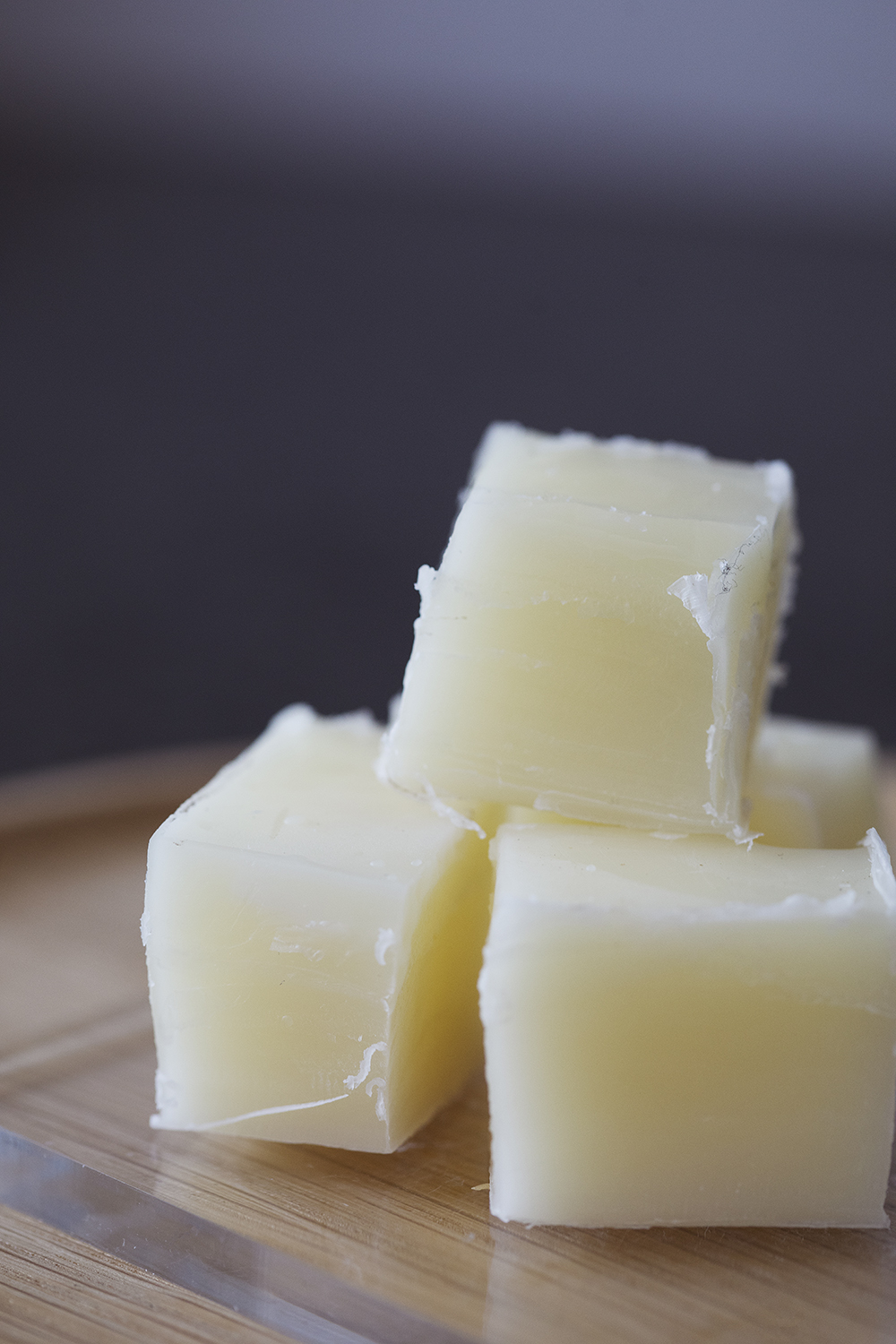
The solidification section describes coarse powder, pastilles and slabs or blocks. These are distinct physical forms that can matter to storage, material handling and the way a team introduces the product into its process. Identify the preferred form and explain any equipment or handling constraints that make it important.
Confirm the applicable form, nominal dimensions and packaging with Cerax for the proposed material. The catalogue’s examples should not be interpreted as a guarantee that every grade can be supplied in every format. Likewise, a photograph showing a block does not establish the available packaging or current stock position.
Keep the physical form separate from the chemical or performance specification. Two products with a similar appearance can have different properties, while the same material may be offered in different forms subject to confirmation. The buying description should make both aspects clear so purchasing and production do not work from different assumptions.
From a candidate to an agreed supply description
How should I prioritise competing requirements?
Custom blends often begin with more than one objective. A request may combine a processing concern, a finished-product requirement and a supply preference. Rank these clearly. Identify the requirements that a candidate must meet and the areas where a trade-off can be considered. A longer list without priorities can make an evaluation harder to interpret.
Describe the current reference and the evidence behind the proposed change. If the issue occurs only in one stage of production or one application, record that context. Avoid changing the acceptance criteria after seeing a sample result without documenting why the brief has changed.
When reviewing a candidate, report both improvements and limitations. A result that solves one issue may introduce another consideration elsewhere in the product or process. Use that evidence to refine the discussion with Cerax rather than treating a single successful observation as a complete decision.
What should I record when the product or brief changes?
Keep the agreed product identity, technical-sheet version, intended use and assessment result together. If the requirement changes, record the reason and identify which earlier conclusions still apply. This is especially useful when a formulation discussion spans the buying, technical and production teams.
A change in material, supplied form or end use may require another review. Do not assume that a previous suitability confirmation covers a differently identified grade or application. Ask Cerax to clarify the revised requirement and the supporting information needed before arranging further evaluation or supply.
For a commercial enquiry, add expected quantities, timing and delivery information to the technical brief. Where a detail remains undecided, say so. A clear record of confirmed and open requirements is more useful than an assumed specification that may send the next discussion in the wrong direction.
For custom blends, send Cerax the intended application, present limitation and priority requirements. Include the proposed enquiry route and any questions about grade documentation, manufacturing scope or product form. The next step can then be discussed around the information available for your specific project.
Check that the quotation matches the agreed product
Before approving a quotation, check that it identifies the agreed material, supplied form, packaging and scope of work. If a quote refers to a concentrate, clarify which further processing belongs to your operation rather than treating it as a finished product.
Ask for clarification where a technical requirement is not reflected in the commercial description. Keep the quotation with the confirmed grade data so the purchasing decision and evaluation refer to the same product.

Grafting wax
Grafting wax is used to protect grafts made on fruit and planation trees and grape vines. The wax is used as a means to support the new graft from infection and decay. Cerax produces wax blends that are flexible, temperature sensitive and UV resistant, to ensure cost-effective performance grafts.
Lubricants
Waxes are commonly used in lubricants for high performance and temperature sensitive applications. Cerax provides waxes for highly-specialised lubrication applications, in dye cast plungers and bore wear reducing liners.

PJ Concentrates (Cable Jelly Waxes)
Petroleum jelly is a mixture of hydrocarbons used in personal care and industrial applications. Cerax provides the wax concentrate/masterbatch that is then mixed with mineral oils to produce the final product specifications.
Cable jelly or petroleum is used to flood communication cables to create extra protection from moisture and other forms of decay. Cerax can formulate blends that have a higher thermal stability, fire resistance or lower shrinkage.
Match Wax
Paraffinic waxes are used by match manufacturers as a fuel to ensure the ignition transfers to burning the splint. Cerax supplies refined and semi-refined paraffinic wax blends to optimise cost efficiency.

Toll Manufacturing And Solidification
Cerax has capacity for toll manufacturing in the purification and refining of waxes. Products can be solidified as coarse powder (+-1mm), pastilles (+-5mm) and slabs/blocks (+-300x600x50mm).

Candles & Fuel
Cerax continues to expand our product offering for the candle and fuels market. The CeraGlo candle range is expanding to include low melt FT grades, candle extrusion grades and liquid bulk paraffin wax equivalents.
The Ceranite range is also undergoing an upgrade as Cerax completes further fractionation capacity. Low molecular weight waxes are used extensively in the charcoal industry, specific melting points combined with correct flash points allow for the production of self-igniting charcoal.