
SPECIALISED WAX PRODUCTS
Blended waxes
Choosing specialised wax products by application
Specialised wax products from Cerax cover blends, functional materials and application-led solutions for industrial customers. Browse the categories below, then request the current information for the exact grade that interests you.
For a more focused starting point, explore packaging waxes, blasting solutions, emulsions and dispersions or micronised waxes. For a tailored requirement, discuss custom blends with the team.
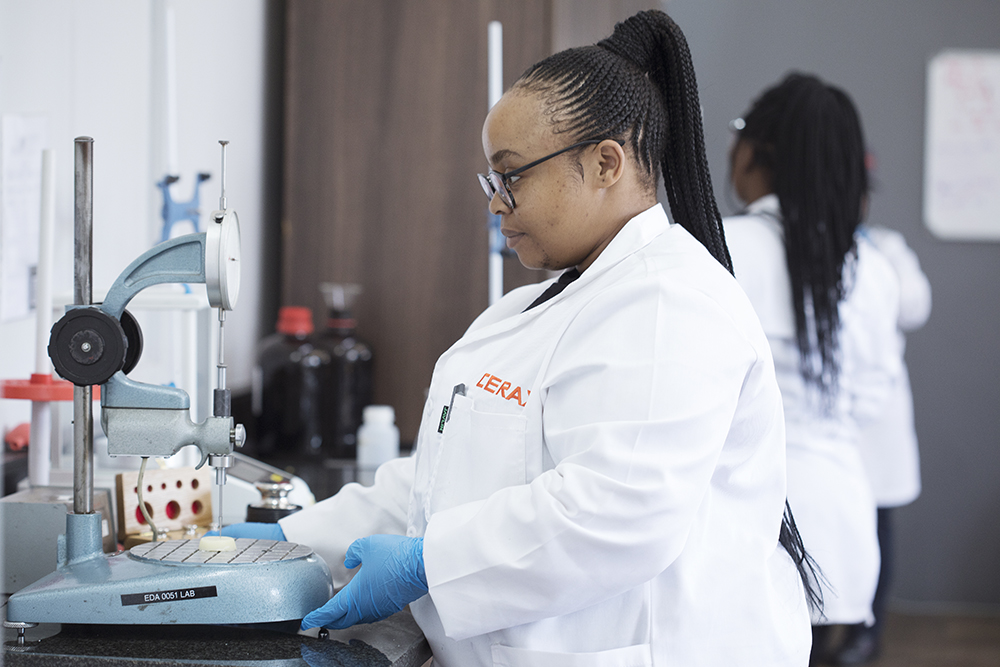
Three checks for comparing specialised wax products
Match specialised wax products to the intended application
Start with the job the material needs to do. A coating, an adhesive and a polishing formulation may need different properties, even when all use wax. Specialised wax products should be compared against the actual requirements of your application, not simply by family name.
Compare the data and test methods
Ask which measurements and methods appear on the grade data sheet. A melting point, congealing point or drop point is not automatically the same measurement. Hardness, viscosity and other values also need the stated test conditions to be meaningful.
ASTM publishes background descriptions of methods such as needle penetration of petroleum waxes. This is general reference information, not a claim that every Cerax product is tested using that method.
Confirm specialised wax products, documents and supply details
Request the technical and safety data sheets for the exact product. Confirm the physical form, packaging and commercial arrangements with Cerax. Where a regulated or approval-sensitive use is involved, request the applicable supporting information rather than inferring approval from a general product description.
To enquire about specialised wax products, contact Cerax with the application, grade reference if known, preferred form and expected volume. The catalogue specifications below remain a starting point for a product-specific discussion.
Material forms across the wider Cerax range
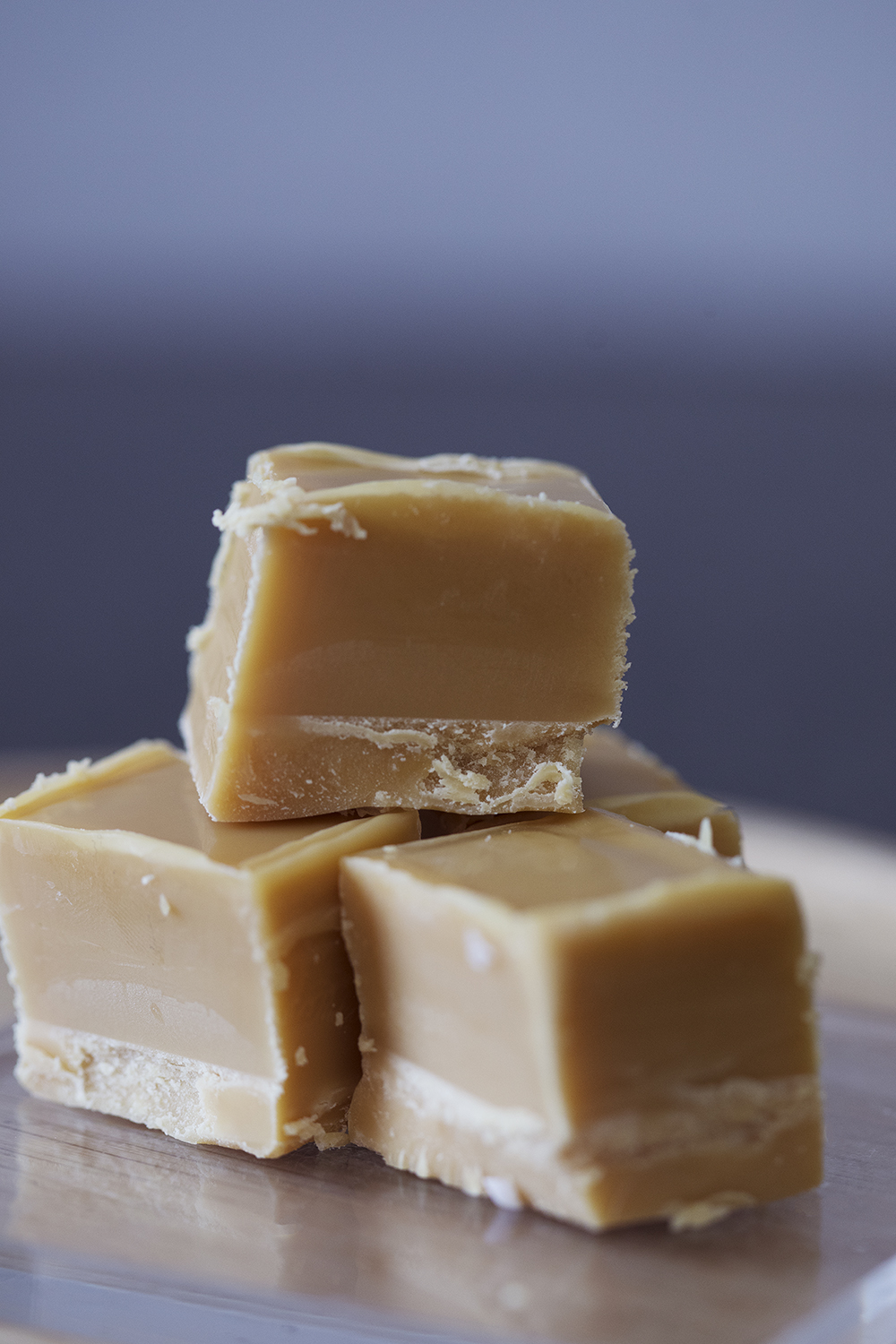
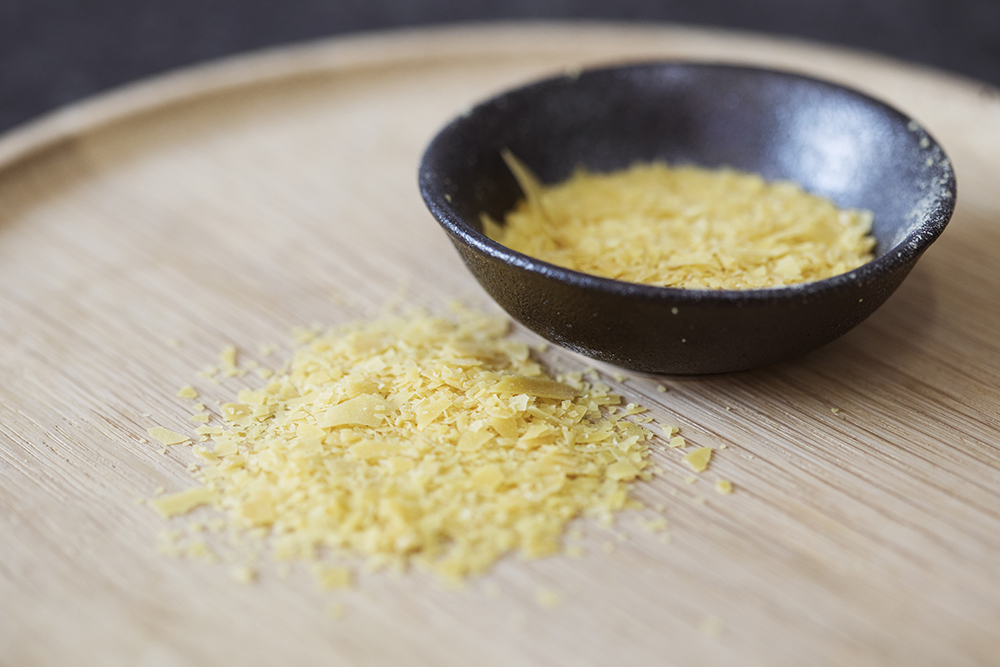
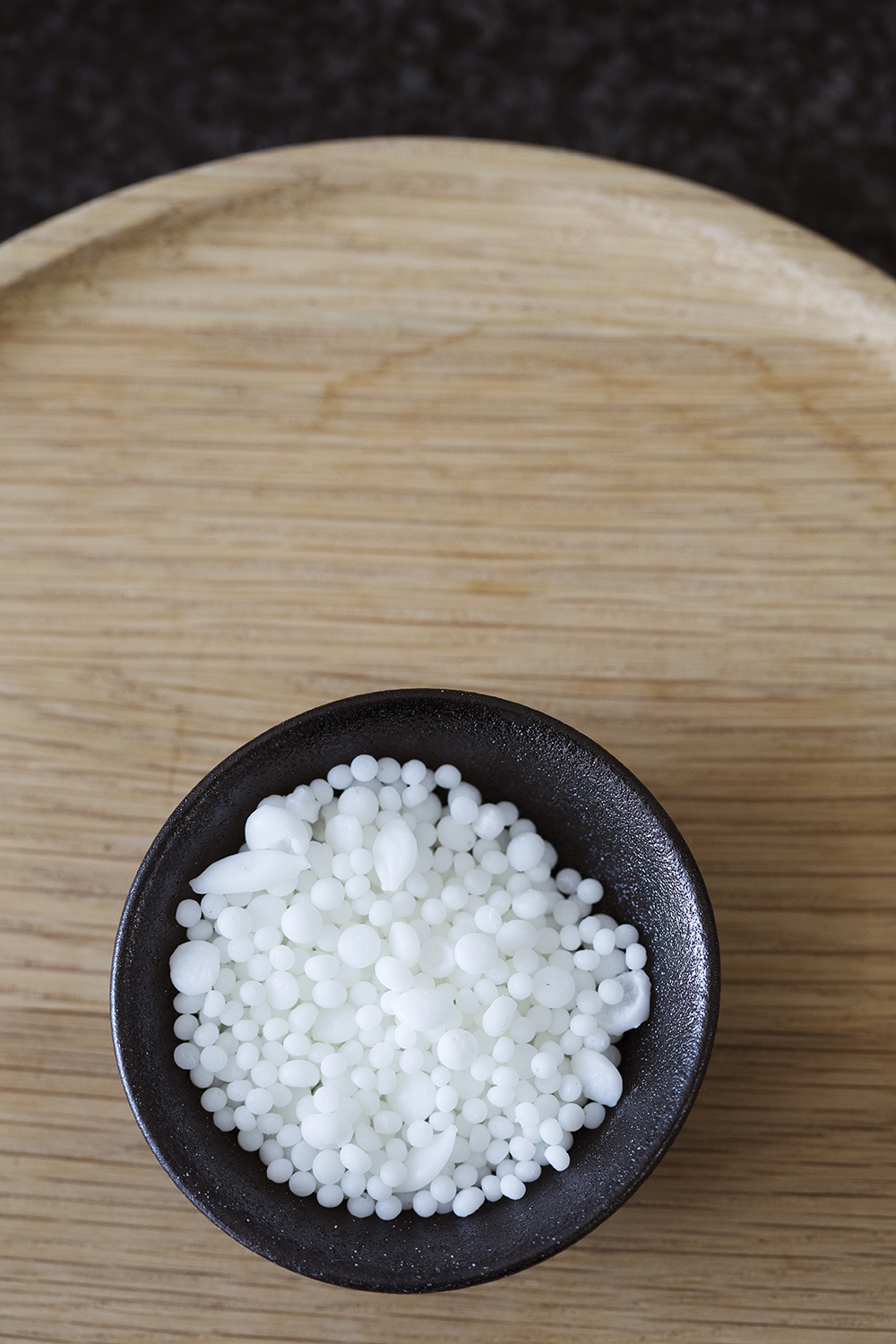
These photos illustrate blocks, flakes and pastilles from our natural wax range. They show different physical forms, not a guarantee that a particular specialised grade is available in every form.
Reading grade information for specialised wax products
A data sheet is easier to use when you understand what each value describes. For specialised wax products, compare the named method, units and conditions as well as the number. Ask Cerax to clarify any term that is not defined on the document.
What does a congealing point tell me?
A congealing point describes behaviour as a material cools and begins to set or resist flow under a specified test. It should not be treated as an interchangeable label for every melting or softening measurement. ASTM provides a public description of its congealing-point method for petroleum waxes.
When comparing specialised wax products, keep the measurement method consistent. If two data sheets use different terms or methods, ask the team what the values mean for the materials being discussed. Do not assume that a single temperature value predicts the full behaviour of your formulation.
How should I read penetration or hardness data?
Needle penetration is an empirical measurement used to describe wax consistency under specified conditions. The stated temperature and method matter. A value without that context is less useful for comparing grades. The ASTM needle-penetration method summary explains the general purpose of this type of measurement.
For specialised wax products that list penetration data, ask which conditions apply and whether the values are typical information or agreed specifications. A hardness-related figure alone does not establish how a blend will coat, bond or perform in your finished product.
Why does oil-content information matter?
Oil content is one of the characteristics that can influence the properties of petroleum waxes. ASTM publishes a public description of its oil-content method. The significance of a value depends on the intended use and the rest of the material specification.
Compare oil-content information alongside the other grade data rather than treating the lowest figure as the best choice for every application. Where oil content is relevant to your brief, ask Cerax which information is available for the particular specialised wax products being considered.
How should product form and packaging be confirmed?
Product form describes how a material is supplied, such as a slab, block, pastille, powder or liquid. It is separate from the properties of the finished formulation. Tell Cerax what form your operation can receive and use, then confirm the actual offering for the proposed grade.
Also check the pack size and order details with the commercial team. A catalogue photograph illustrates a material or category; it does not replace a grade reference or a confirmation of the packaging for your order. Keep the technical and purchasing descriptions aligned.
What does a supplier document establish?
Technical information, safety information and any application-specific declarations serve different purposes. Request the document appropriate to the question you need answered. Confirm the exact product name, revision and intended use before relying on information from an older discussion.
For specialised wax products, a broad family description does not establish food-contact approval, compliance for a particular market or suitability for a regulated application. Ask for the relevant grade-specific evidence and confirm your own requirements with appropriately qualified advisers.
Specialised Wax Products for Adhesives
Specialised wax products from Cerax are engineered for demanding industrial applications. Wax is the most effective regulator of adhesive properties. The primary function of waxes in products like Hot Melt Adhesives (HMA) is to reduce the melting point and viscosity, improve the fluidity and wettability, increase bonding strength, reduce agglomeration and ultimately reduce the cost of the glue. Cerax produces a range of blends that are suitable for hot melt and ‘cool’ melt applications. These specialised wax products can be tailored to application temperature, viscosity and bonding requirements.
Congealing Point:
Colour:
A low melting temperature hot melt adhesive, used for heat sealable packaging and coating.
Corrugated Board
Cerax provides a range of waxes used in the packaging industry as moisture barrier and strength coatings for print paper and corrugated cardboard packaging. Blends are tailored to suit different viscosities and application temperatures, to carefully control the weight per square meter applied.
Congealing Point: 76 +- 2 degree °C
Colour: Light Brown
A blend of paraffinic, microcrystalline, resin and polymers to create the optimum coating for corrugated cardboard used in the packaging industry.
Congealing Point: 76 +- 2 degree °C
Colour: Off-white
A blend of food contact approved waxes, resins and polymers used as a barrier coating in corrugated cardboard for food packaging.
Congealing Point:
Colour:
A blend of waxes, resins and polymers used in pre-coating fluting of corrugated cardboard, to improve water resistance and strength of cardboard packaging.
Flexible Packaging
Flexible packaging waxes are formulated to provide barrier coatings to converted paper-for-packaging applications. Cerax makes bespoke blends to create twist wrap functionality or heat sealable applications. Grades can be manufactured with food contact approved materials if necessary.
Low viscosity paper coating/impregnating wax that imparts high gloss, is quick melting, economical and suitable for a wide variety of applications.
Specifications:
Congealing Point: 61-64 degrees °C
Penetration at 25 degree °C: 15 – 20
Viscosity: 12-15mm 2S
Colour: Saybolt>27
A high performance blend of coating waxes for paper conversion that requires twist or flex.
Low viscosity paper coating/impregnating wax that imparts high gloss, is quick melting, economical and suitable for a wide variety of applications.
Specifications:
Congealing Point: 61-64 degrees °C
Penetration at 25 degree °C: 15 – 20
Viscosity: 12-15mm 2S
Colour: Saybolt>27
Blasting Solutions
Cerax produces a range of mining cartridge explosive wax blends, that are optimised to provide the perfect medium for stable, water-in-wax emulsions. The blends can be altered to create specific rheologies and cartridge stiffness.
Specialised Waxes
Ezipol
Ezipol is Cerax’s answer to the world of floor polish formulations. This single pack solution combines all the technology and waxes required to make the clients desired polish. Not only does the client receive a quality-controlled base for their polish but also gets technical support from the Cerax lab, who will assist in production changes, formulation changes and development of the desired final product.
Colour: Light Cream
Density @25 degrees °C (kg/l) : 0.8 +- 0.03
Drop Point (Degrees °C): 90 +-4
Viscosity @ 140 degrees °C (mPa): 50
Acid Number (mg KOH/g): 3.3
Wax Congealing Point (Degrees °C) : 80
Form: Slabs
Packaging: 25kg boxes
A solvent based formulation is easy to use, very economical when used in the prescribed formulation, has great solvent binding properties that allows for robust formulation possibilities, excellent temperature stability for the hot African summer months. Being a single pack solution it allows clients to carry a far lower inventory requirement. Please get in touch for pricing and formulation guidelines.
Colour: Light Cream
Density @25 degrees °C (kg/l) : 0.8 +- 0.03
Drop Point (Degrees °C): 90 +-4
Viscosity @ 140 degrees °C (mPa): 50
Acid Number (mg KOH/g): 3.3
Wax Congealing Point (Degrees °C) : 80
Form: Slabs
Packaging: 25kg boxes
A water in wax-based emulsion formulation is easy to use, providing economical benefits, low inventory holding requirements, robust formulation possibilities. Being water-based there is a low odour. Please get in touch for pricing and formulation guidelines.
Emulsions And Dispersions
Cerax supplies wax emulsions and dispersions for applications including construction board, polishes, coatings, mould release and concrete curing. Dispersions typically contain finely divided wax in water or solvent; wax emulsions are commonly produced from molten wax and a liquid phase.
The range can use oxidised hard wax, natural wax or paraffin-type wax. Wax content can vary from 1% to 60%. Non-ionic, cationic and anionic options depend on the formulation and application, so compatibility and pH requirements need a grade-specific discussion.
Cerax also offers a one-pack solution for paste floor polish applications. Explore the emulsions and dispersions guide or ask for the relevant technical data.
Micronised Waxes
Micronised Waxes can be defined as wax powder with an average particle size of less than 10 micrometres. Hard waxes (such as Fischer Tropsch or Polyethylene wax) can be ground or sprayed to this fine particle size while other lower melt viscosity waxes can be sprayed to achieve the desired size. Micronised waxes are used in applications such as printing inks to provide rub resistance while maintaining over-printability. In coatings Micronised waxes provide mar and abrasion resistance. Cerax has the ability to supply Micronised waxes using a variety of different base wax raw materials.
Investment Casting Waxes
The lost wax process is used in speciality metal forgings, for high performance castings in the aerospace or automotive industry. Investment casting waxes are either filled or non-filled high-performance blends that show low shrinkage, good heat stability and recyclability. Cerax has access to a wide range of casting waxes, used for high performance applications to artistic sculpturing.
Pressure Sensitive Adhesives
Cerax offers Plastoflex™ from Paramelt. This pressure sensitive adhesive is designed for bonding paper and plastic labels on hard containers or for non-carbonated and carbonated beverage PET bottles. It is also used extensively in ‘spot glue’ applications, which assists with keeping boxes stacked in pallet form while shipping.
Viscosity @ 150C – 500 to 1000 mPa.s
Colour – Light Yellow
Softening Point R&B – 58 to 68°C
Application Temp – 120 to 160°C
Open Time – N/A as it is pressure sensitive.
Plastoflex 9605 is produced in self-protected blocks of which the film is part of the recipe. The odour is typical of a styrene. Plastomelt 9605 can be used in most Hot Melt applicators.
Lubricants
Waxes are commonly used in lubricants for high performance and temperature sensitive applications. Cerax provides waxes for highly-specialised lubrication applications, in dye cast plungers and bore wear reducing liners.
Matchwax
Paraffinic waxes are used by match manufacturers as a fuel to ensure the ignition transfers to burning the splint. Cerax supplies refined and semi-refined paraffinic wax blends to optimise cost efficiency.
Custom Blends
Cerax produces a plethora of custom blends for customers across a diverse range of industries. Customers will either approach Cerax with specific performance needs, or Cerax will identify how blends can be optimised around price and performance. Cerax has an experienced and well-resourced research and development team that will assist with custom requirements. Custom blends make up the majority volume of our output.
Toll Manufacturing And Solidification
Cerax has capacity for toll manufacturing in the purification and refining of waxes. Products can be solidified as coarse powder (+-1mm), pastilles (+-5mm) and slabs/blocks (+-300x600x50mm).
Pan Seal Rings
Cerax was the first manufacturer of pan seal or latrine rings in Africa. These rings are used as a DIY plumbing replacements for corroded rubber seals that join the toilet to the wall. The ring may also be used as a flexible plumbing putty that never corrodes or dries out. Cerax is able to toll manufacture rings and putty, or supply the correct waxes for customers to package the rings themselves.
Grafting Wax
Grafting wax is used to protect grafts made on fruit and planation trees and grape vines. The wax is used as a means to support the new graft from infection and decay. Cerax produces wax blends that are flexible, temperature sensitive and UV resistant, to ensure cost-effective performance grafts.
Cable Jelly Waxes
Cable jelly or petroleum is used to flood communication cables to create extra protection from moisture and other forms of decay. Cerax can formulate blends that have a higher thermal stability, fire resistance or lower shrinkage.
PJ Concentrates
Petroleum jelly is a mixture of hydrocarbons used in personal care and industrial applications. Cerax provides the wax concentrate/masterbatch that is then mixed with mineral oils to produce the final product specifications.
Dust Suppression Waxes
Wax blends and emulsions can be used to suppress dust in mining and equestrian applications. Cerax provides concentrates ready for emulsification or dispersion that can be tailored for higher moisture or temperature resistance.
Sepcera/Dicera (TBC)
xxx