


Carnauba wax is well known for its hardness and its contribution to gloss in formulated products. For an industrial buyer, however, those familiar properties are only the beginning of the selection process. The grade, accompanying ingredients and application method determine whether the finished result meets the brief.
Select the grade for the required finish and processing method. Balance hardness with the rest of the formulation, assess compatibility and confirm documentation for the intended use. Natural origin does not automatically establish suitability or an environmental claim.

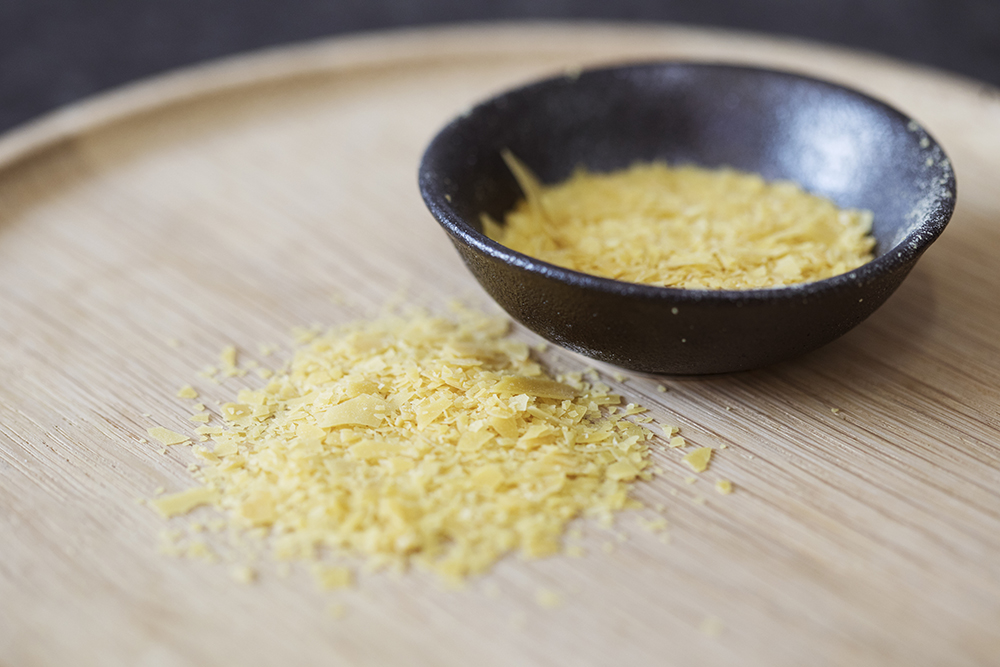
What is carnauba wax?
Carnauba is a plant-derived wax obtained from the leaves of a palm native to Brazil. It is a hard natural wax used in a range of formulations where properties such as gloss, hardness and slip are useful. It is available in different grades and physical forms.
Cerax features carnauba within its natural wax range. The supplied grade’s data sheet should be used for specific thermal and quality requirements. A general description cannot establish the performance of every commercial grade or blend.
Where can carnauba wax be useful?
Polishes are a familiar application because surface appearance and the behaviour of the deposited film matter. Carnauba may also form part of other wax-based or emulsified products. In each case, the contribution depends on the formulation rather than the wax acting alone.
| Application question | Why it matters | Suggested evaluation |
|---|---|---|
| Is a higher-gloss finish needed? | Appearance depends on the complete film and substrate | Compare on the intended surface under consistent lighting |
| Is the product too soft? | Hardness must be balanced with flexibility and application feel | Assess the finished formulation, not only the neat wax |
| Is the system water-based? | Solid wax does not simply dissolve in water | Review a suitable emulsion or dispersion route |
| Are there specific end-use requirements? | Compliance belongs to a documented grade and use | Request the relevant supplier documentation |
5 essential carnauba wax selection checks
1. Define the finish before choosing the grade
“Shiny” is not a complete performance specification. Decide whether the desired result concerns initial gloss, appearance after buffing, handling or durability under the conditions the customer actually encounters. Identify the substrate, application method and conditioning time used for comparison.
Use a retained reference product and consistent test panels. If the application thickness or preparation varies, visual differences may not be caused by the wax. Where appearance is critical, agree how the result will be assessed before the trial begins.
2. Balance hardness with usability
Carnauba wax is hard, but an effective polish or stick formulation must often satisfy several properties at once. The product may need to spread, release from its container, buff or withstand handling. Increasing one property without considering the others can create a less usable product.
Evaluate the complete blend across the relevant storage and application conditions. Softer waxes, oils or other ingredients may be part of the balance, but substitutions should be assessed experimentally. Cerax’s custom blends provide a starting point for discussing a requirement that a single wax cannot meet.
3. Check the processing route
Review the equipment’s capabilities and the candidate grade’s thermal requirements. Confirm the intended incorporation method and ensure all ingredients are compatible with it. A material that is easy to use in one process may require a different approach in another.
For water-based products, a suitable emulsified or dispersed system may be more relevant than adding solid flakes directly. The wax emulsions and dispersions guide explains why the delivery form matters. Do not assume that a natural wax will dissolve in water.
4. Compare colour, form and consistency
The appearance of the raw material can influence selection for pale or colour-sensitive formulations. Ask what variation is allowed in the grade specification and compare the finished product, particularly where a subtle colour shift would matter to the customer.
Physical form also affects handling. Flakes, powders and prepared systems are not identical operational choices. Discuss storage, dosing and incorporation with the supplier, and use the appropriate safety data sheet for the material being handled. Record the exact identity used in the successful trial.
5. Confirm claims and end-use documentation
Do not equate “natural” with suitable for every application. Cosmetic, pharmaceutical and food-related uses can require specific grade documentation and conditions of use. Obtain the relevant confirmation for the exact material rather than relying on a general product-family description.
Likewise, renewable origin alone does not prove that a finished product is sustainable, biodegradable or responsibly sourced. Any environmental or sourcing claim should be backed by evidence appropriate to the claim. Where such requirements are part of the brief, raise them before selecting a sample.
What a useful carnauba wax trial should include
Write down the formulation, batch identities and preparation method. Compare the finished product against the existing reference after the same conditioning period. Include both the desired improvement and the properties that must not be compromised.
For example, a polish trial might assess initial appearance, application behaviour and the finish after the intended buffing process. The exact test programme will depend on the product and substrate. Keep samples and observations together so a promising result can be repeated rather than remembered informally.
Carnauba wax FAQs
Is carnauba wax the same as beeswax?
No. Carnauba is plant-derived, while beeswax is produced by bees. They have different properties and may be used together in formulations, but they are not interchangeable by name.
Does carnauba wax dissolve in water?
No. A water-based formulation generally needs an appropriate emulsification or dispersion approach rather than simple dissolution of the solid wax.
Does more carnauba wax always mean more gloss?
No. Surface preparation, other ingredients and film formation influence the result. Determine the appropriate formulation through comparison tests.
Can any carnauba wax grade be used for food or cosmetics?
Do not assume so. Ask for documentation confirming the supplied grade’s suitability for the intended application and relevant conditions of use.
Further reading: Koster Keunen carnauba grade information illustrates how a supplier documents one particular grade. Its specifications and approvals must not be assumed to apply to every carnauba product or to Cerax supplied grades.
Discuss your application with Cerax
Share your process, current formulation challenge and required performance with the Cerax team.
Discuss your wax requirements