


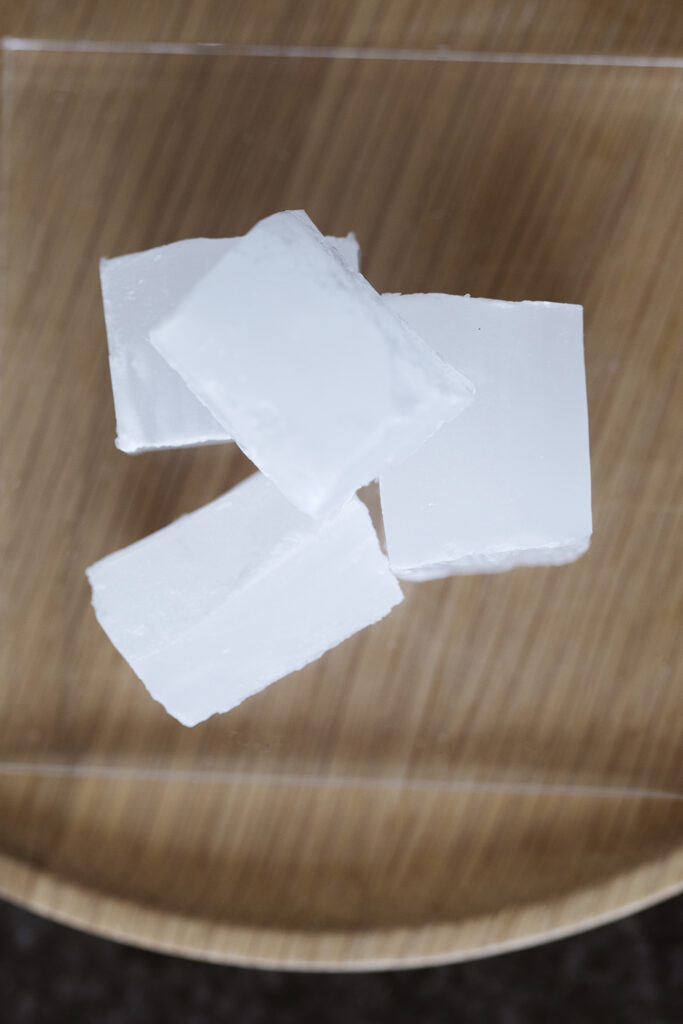
Choosing a paraffin wax grade is a production decision, not simply a price comparison. Oil content, melting behaviour and consistency can all influence the way a coating, polish, candle or adhesive blend performs.
Start with the finished product’s requirements. Compare the documented properties of each grade, then validate the shortlist in your own formulation. A more highly refined wax is not automatically the best choice for every industrial application.
Paraffin wax grades: what is the difference?
Paraffin wax is a petroleum-derived wax used across many industries. Within that broad family, the degree of refining and the characteristics of the feedstock affect the final material. Two products sold under the same general description may still behave differently on a production line.
Cerax’s paraffin wax range includes slack, semi-refined and fully refined options. The grade name is a useful starting point, but the technical data sheet should guide the actual specification.


| Grade family | Main distinction | Questions to ask |
|---|---|---|
| Slack wax | Higher residual oil; properties vary by source | Can the application accommodate the oil level, colour and variability? |
| Semi-refined | Reduced oil compared with slack wax | Does the specific grade meet the required finish and processing window? |
| Fully refined | Low residual oil and more tightly refined material | Are purity, odour and appearance requirements supported by documentation? |
7 checks before specifying paraffin wax
1. Define the job the wax must do
Separate essential requirements from preferences. A paper coating might need a particular barrier and handling performance, while a polish may prioritise finish and buffability. An adhesive blend must be evaluated as a complete formulation. Naming the application helps a supplier narrow the options before a sample is selected.
2. Compare oil content
Residual oil can influence softness, appearance and compatibility. Do not assume that a grade suitable for one industrial blend will meet another product’s requirements. Compare declared limits and test methods, and ask whether the supplied batch documentation confirms the property that matters to your process.
3. Check melting and setting behaviour
The reported melting point is only part of the picture. Review how the material melts, mixes and sets under the conditions your equipment can maintain. A replacement that looks similar at room temperature can behave differently during cooling. Keep application temperature, line speed and cooling conditions consistent when comparing samples.
4. Assess hardness and flexibility together
A harder material is not always a better material. A surface may need firmness without becoming too brittle during folding or handling. Where straight paraffin wax does not provide the required balance, a custom wax blend may be worth evaluating. Test the finished article, not only the neat wax.
5. Review colour and odour requirements
Appearance and odour can be important even when the wax is a small part of the formulation. Check samples in the finished product under realistic storage conditions. A visual comparison of solid samples alone cannot establish suitability for a customer-sensitive application.
6. Confirm documentation for the intended use
Ask for the technical data sheet, safety data sheet and relevant batch information. Where an application has specific regulatory or customer requirements, request written confirmation for the exact grade and intended conditions of use. The words “fully refined” do not, by themselves, establish approval for food-contact, cosmetic or pharmaceutical use.
7. Compare total production cost
Look beyond the price per kilogram. Include handling time, blend adjustments, rejects, cleaning and repeatability. A lower-priced option may be economical in one formulation and unsuitable in another. Use trial results to make the comparison measurable instead of assuming that either the cheapest or the most refined grade will win.
Build a useful production trial
Begin with a retained sample of the current approved product and a clearly identified candidate grade. Record the formulation, raw-material batch numbers, addition sequence and processing conditions. Change one planned variable at a time wherever practical.
- Set acceptance criteria: decide what counts as a pass for appearance, processing and end-use performance.
- Run the comparison: use the same substrate, equipment and measurement approach.
- Check after storage: examine the finished product after the relevant cooling and conditioning period.
- Review the full result: include operator observations, defects and cost implications.
For packaging applications, continue with the packaging wax range. If flexibility and binding performance are central to the brief, the microcrystalline wax selection guide explains a different wax family that may be considered in a blend.
Paraffin wax FAQs
Is fully refined paraffin wax always the best grade?
No. It may be appropriate where low oil content and refined appearance matter, but the best choice depends on the complete application, specification and trial results.
Can I replace one paraffin grade with another directly?
Do not assume a one-for-one replacement. Compare the technical data and validate the candidate in the existing formulation before changing a production specification.
What should I send a paraffin wax supplier?
Share the application, current specification, processing conditions, required product form, expected volume and the problem you want to solve. Include any end-use documentation requirements.
Is paraffin wax the same as microcrystalline wax?
No. They are different wax families with different structures and typical performance characteristics. They may be used together in formulations, but they are not interchangeable by name.
Need help narrowing down a paraffin grade?
Tell Cerax what you manufacture, how you process it and what the finished product needs to achieve.
Discuss your wax requirementsFurther reading: Sasol information on formulated wax blends and Cerax paraffin product information. This guide supports initial selection; the supplied grade’s documentation and application testing remain essential.